
A septic system is one of the most important components of a home’s plumbing, quietly managing wastewater and keeping your property safe and sanitary. Homeowners in Spring Hill, Florida often wonder how long their septic system will last and what factors influence its lifespan.
While there is no one-size-fits-all answer, understanding the realistic life expectancy of different septic systems can help you plan maintenance, avoid costly repairs, and protect your investment.
In this article, we break down the typical lifespan of septic systems, explore the factors that impact their durability, and provide practical tips for keeping yours running efficiently for years to come.
Understanding the Lifespan of a Septic System
The lifespan of a septic system varies widely depending on the type of system, quality of installation, and ongoing maintenance.
On average, traditional concrete septic tanks can last 20 to 40 years, while plastic or fiberglass tanks often have a shorter lifespan of 15 to 30 years.
The drain field, which handles wastewater treatment in the soil, may wear out sooner if it is exposed to heavy usage, poor drainage, or soil compaction. Understanding these ranges helps homeowners anticipate repairs, schedule regular inspections, and make informed decisions about system upgrades or replacements.
Several key factors influence how long a septic system will last. Understanding these can help homeowners prevent premature failure and costly repairs:
- Quality of Installation: Proper design and professional installation are crucial to prevent early failure.
- Tank Material: Concrete tanks are durable and long-lasting, while plastic and fiberglass tanks are more prone to cracking or shifting.
- Usage and Household Size: Larger households or heavy water use can put extra strain on the system, reducing its lifespan.
- Soil and Drain Field Conditions: Poorly draining soil, compacted ground, or high water tables can stress the drain field.
- Maintenance Practices: Regular pumping, inspections, and avoiding flushing harmful chemicals can significantly extend system life.
Average Lifespans by Septic Tank Type
Septic systems can vary widely in lifespan depending on the tank material and system type. Traditional concrete tanks are the most durable, often lasting between 30 and 40 years when properly maintained.
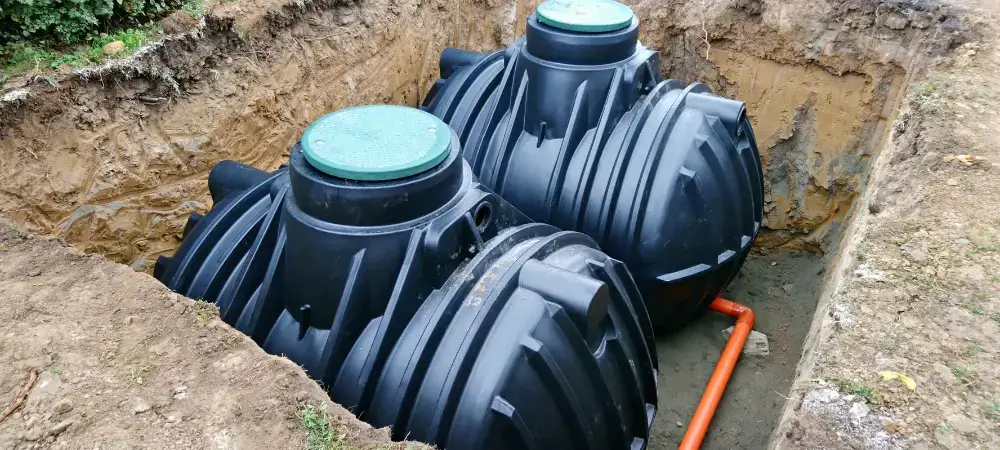
Plastic and fiberglass tanks are lighter and easier to install, but they typically last 20 to 30 years and can be more susceptible to cracking or shifting.
Alternative systems, such as aerobic treatment units or sand filter systems, generally have shorter lifespans of 15 to 25 years, largely because they rely on mechanical components and specialized treatment processes.
Knowing the typical lifespan of your system type helps homeowners plan for inspections, maintenance, and eventual replacement before problems arise.
Signs Your Septic System Is Near the End of Its Life
Recognizing the warning signs of a failing septic system can save homeowners from costly repairs and environmental hazards. Common indicators include:
- Slow Drains or Backups: Frequent backups in sinks, toilets, or showers often signal a clogged or failing system.
- Unpleasant Odors: Persistent sewage smells around the yard or near the tank can indicate leaks or drain field problems.
- Lush or Spongy Grass: Overly green or soggy patches above the drain field suggest wastewater is surfacing instead of properly dispersing.
- Pooling Water: Standing water near the tank or drain field may indicate a saturated or failing system.
- Frequent Pumping Needs: If your system requires pumping more often than recommended, it may be nearing the end of its life.
Extending the Life of Your Septic System
Proper care and regular maintenance are the best ways to extend the life of your septic system.
Start by scheduling routine inspections and septic tank pumping in Spring Hill according to your system’s needs rather than waiting for problems to appear.
Be mindful of what goes down your drains. Avoid flushing harsh chemicals, grease, or non-biodegradable items that can damage the tank or clog the drain field.
Distribute water usage evenly throughout the day to prevent overloading the system, and address leaks or plumbing issues promptly.
Finally, work with a trusted local septic service to ensure professional guidance and maintenance. Regular care not only protects your investment but also keeps your home safe and functional. Contact us today in Spring Hill, Florida to schedule a septic inspection or pumping and keep your system running efficiently for years to come.